facials
HydraFacial vs Regular Facial: Which Is Right for You?
Ashley Thompson · August 2, 2026
Living in Brickell, Miami means our skin is constantly interacting with bright sun, ocean humidity, and the fast pace of city life. Keeping your complexion clear, hydrated, and glowing requires a deliberate skincare strategy. When exploring clinical skin health, one of the most common dilemmas clients face is choosing between a traditional aesthetic facial and a device-driven treatment like the HydraFacial.
While both options aim to elevate your skin’s appearance and texture, they rely on distinctly different methods, technologies, and philosophies. Understanding the nuances of a hydrafacial vs regular facial will help you align your professional treatment plan with your personal skin goals, lifestyle, and timeline.
Understanding the Basics: Traditional Facials vs. Hydro-Dermabrasion
To appreciate how these two popular options compare, it helps to understand how each treatment operates on the skin.
The Traditional European or Spa Facial A traditional facial relies primarily on hands-on techniques, topical formulations, and classic aesthetic tools. It is designed to be deeply relaxing while addressing superficial skin concerns. A standard session usually involves double cleansing, gentle manual exfoliation (such as a scrub or mild enzyme), warm steam to open the pores, manual extractions performed by an esthetician, a customized facial mask, and a facial massage to encourage lymphatic drainage.
Traditional facials are highly customizable in terms of aromatherapy, topical ingredients, and massage duration. They offer a holistic, relaxing experience that focuses on surface conditioning, stress relief, and skin maintenance.
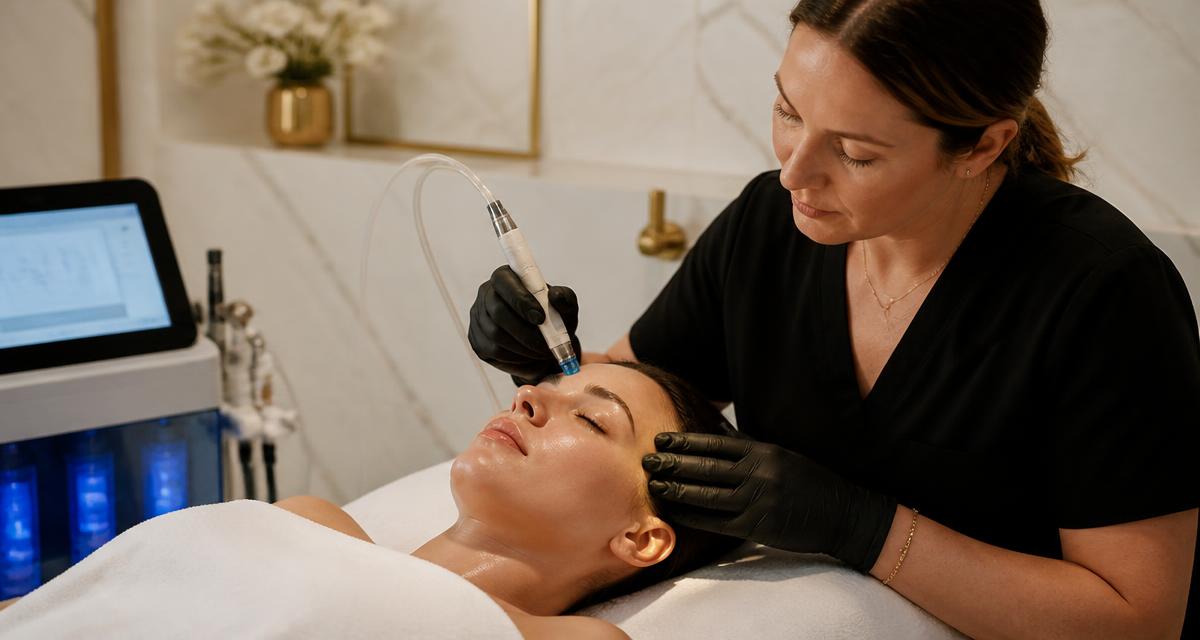
The HydraFacial Experience In contrast, a HydraFacial is a medical-grade, multi-step skin resurfacing treatment that utilizes patented Vortex-Fusion technology. Rather than relying solely on manual manipulation, a specialized device cleanses, exfoliates, extracts, and hydrates the skin simultaneously.
The system works through a closed-loop tip that creates a gentle fluid vortex. This process fluidly dislodges impurities, vacuums away congestion, and delivers targeted nutrient-rich serums—including hyaluronic acid, peptides, and antioxidants—deep into the freshly exfoliated skin layers. It bridges the gap between classic pampering and clinical aesthetic science.
How the Two Approaches Differ in Performance
When evaluating a hydrafacial vs regular facial, the main distinctions lie in mechanical delivery, depth of extraction, and skin response.
Exfoliation and Extraction Precision Regular Facial: Exfoliation relies on physical scrubs or light topical enzymes. Extractions are performed manually using fingers or a metal comedone extractor. While effective, manual extractions can occasionally cause temporary redness, mild inflammation, or localized sensitivity, especially for reactive skin types. HydraFacial: Exfoliation combines mechanical hydro-dermabrasion with a gentle chemical peel (typically a mild blend of glycolic and salicylic acids). Extractions are entirely automated through painless vortex-suction technology. Impurities, sebum, and debris are lifted fluidly without pinching or squeezing the tissue.
Ingredient Delivery In a classic facial, serums and masks are applied topically and massaged into the skin. Penetration depends on manual absorption and surface massage. During a HydraFacial, the skin is simultaneously exfoliated and infused under pressure. Because dead surface skin cells are continuously swept away during the process, the skin is primed to absorb concentrated active ingredients far more efficiently.
Immediate Post-Treatment Skin Response Traditional facials that include intensive manual extractions often require a brief cooling-down period before skin redness subsides. Conversely, HydraFacials are widely celebrated for delivering an immediate, plump radiance with zero downtime. You can step out of your appointment and straight into your day with instant luminosity.
To discover our range of specialized skin treatments and advanced therapies, feel free to explore our treatment menu.
Timelines, Upkeep, and Practical Considerations
Maintaining a healthy, radiant complexion requires consistency. How each treatment fits into your long-term wellness schedule depends on your lifestyle and skin requirements.
Treatment Frequency Traditional Facials: Most skincare professionals recommend scheduling a traditional facial every 4 to 6 weeks. This timeline aligns with the natural cellular turnover cycle of adult skin, allowing for gentle maintenance and ongoing hydration. HydraFacial: A HydraFacial can be performed every 4 weeks to maintain clear pores and optimal hydration levels. Because of its instant brightening effect and lack of post-procedure redness, many clients also choose to schedule a single session 24 to 48 hours prior to major events, weddings, or photoshoots.
Upkeep and Daily Skincare Integration Both treatments serve as an excellent reset for your home skincare routine. By removing the built-up layer of dead skin cells and clearing pore congestion, both options enhance how well your daily serums and moisturizers penetrate the skin.
However, because a HydraFacial incorporates chemical exfoliation and deep fluid delivery, your skin barrier requires simple, hydrating support in the days immediately following treatment. Avoiding aggressive home retinoids or strong acids for a few days after any professional facial treatment is standard practice to preserve your skin’s balance.
To learn more about our aesthetic philosophy and medical team, visit our page about No Filter Medical Spa.
How Aesthetic Providers Choose the Best Match for Your Skin
When clients arrive at our Brickell practice asking to weigh a hydrafacial vs regular facial, our providers consider several key factors during the clinical assessment:
- Primary Aesthetic Goals: If your primary objective is deep mental relaxation, custom massage, and tactile luxury alongside gentle maintenance, a classic facial may be ideal. If your target is visible clarity, reduced pore appearance, intense hydration, and refined texture, a medical-grade hydro-dermabrasion option is usually preferred.
- Skin Sensitivity and Conditions: Clients with delicate skin or vascular conditions like rosacea often prefer the controlled, soothing hydro-delivery of a HydraFacial over the pressure of manual extractions.
- Active Congestion: For stubborn blackheads and urban pollution buildup common in warm coastal climates, the vacuum suction of specialized device technology offers uniform, predictable clearing.
- Time Constraints: If you need significant skin refinement without any visible recovery time or post-extraction flushing, device-based treatments provide reliable, camera-ready results instantly.
Preparing for Your Consultation
Choosing the right facial treatment should always start with a clear, collaborative conversation with a qualified skin specialist. Rather than attempting to guess what your skin needs, a professional skin evaluation allows us to examine your moisture barrier, underlying congestion, and overall skin health.
During your initial consultation, we encourage you to discuss: Your current daily home skincare products (including active ingredients like retinol, vitamin C, or exfoliating acids). Any upcoming events, sun exposure, or travel plans. Your personal comfort level with manual extractions versus machine-assisted treatments. Your long-term skin health objectives.
At No Filter Medical Spa in Brickell, Miami, we believe skincare is never one-size-fits-all. Whether you choose a classic customized facial or an advanced HydraFacial experience, our focus is always on delivering healthy, confident skin that feels as good as it looks.
Ready to elevate your skincare routine? We invite you to book a personalized consultation with our expert aesthetic team at No Filter Medical Spa today.
Disclaimer: Individual results may vary based on skin type, lifestyle, and underlying health factors. The information provided in this article is for educational purposes only and should not be taken as medical advice. Always consult with a licensed skincare professional or medical provider to determine the best treatment plan for your specific skin needs.
This article is for general education only. It is not medical advice, results vary from person to person, and you should consult a licensed provider before starting any treatment.
Book a Consultation