laser
IPL Photofacial for Sun Damage Guide
No Filter Medical Spa · October 1, 2026
Living in South Florida offers endless days of warm sunshine, vibrant ocean views, and an outdoor lifestyle. However, continuous exposure to ultraviolet (UV) radiation takes a quiet toll on the skin. Over time, cumulative sun exposure manifests as dark spots, uneven pigmentation, visible capillaries, and a loss of skin radiance—a combination of changes known as photoaging. For those seeking to address these visible signs of sun damage without significant downtime, an ipl photofacial for sun damage has become one of the most trusted non-invasive aesthetic options available.
At No Filter Medical Spa, we believe that educated clients achieve the best, most satisfying outcomes. Whether you spend your weekends along South Beach or commute through Downtown Miami, understanding how light energy interacts with your skin helps you make informed choices about your skincare routine. In this guide, we break down what an IPL photofacial actually is, how the technology works beneath the surface, who makes an ideal candidate, and what to expect during a session.
What Is an IPL Photofacial for Sun Damage?
Intense Pulsed Light (IPL), often referred to as a photofacial or photorejuvenation, is a light-based aesthetic procedure designed to target skin discoloration, cumulative sun damage, and vascular lesions. While many people refer to IPL as a laser treatment, it is technically distinct from traditional laser therapy.
Traditional aesthetic lasers emit a single, concentrated wavelength of light focused on one specific layer or pigment. In contrast, IPL delivers broad-spectrum light across multiple wavelengths. This broad range allows the light energy to penetrate different depths of the dermis, enabling the device to address several skin concerns simultaneously—including solar lentigines (sun spots), freckles, age spots, and diffuse facial redness.
Because IPL uses scattered, broad-spectrum light rather than a singular high-energy beam, it is inherently gentle on the surface layer of the skin (the epidermis). The light passes harmlessly through the outer surface and is selectively absorbed by pigment-producing cells and small blood vessels beneath. This makes an IPL photofacial for sun damage an attractive choice for individuals looking to refresh their skin tone without the prolonged recovery associated with aggressive resurfacing procedures.
How Light Energy Restores Sun-Damaged Skin
To understand why IPL photofacials are effective for sun-damaged skin, it helps to look at the process on a cellular level. The treatment relies on the principle of selective photothermolysis—using precise light energy to gently heat and break down target structures without harming the surrounding healthy tissue.
Here is a step-by-step breakdown of how the process works:
- Targeting Chromophores: When broad-spectrum light penetrates the skin, it is absorbed by specific targets called chromophores. In sun-damaged skin, the primary chromophores are melanin (the pigment responsible for dark spots and hyperpigmentation) and hemoglobin (the red pigment in superficial blood vessels).
- Thermal Energy Conversion: As these chromophores absorb the light energy, that energy converts into controlled heat. For sun spots and dark patches, the thermal energy shatters concentrated pockets of excess melanin into microscopic particles. For tiny visible capillaries, the heat gently coagulates the vessel walls, causing them to collapse and gradually fade.
- Natural Clearance: Over the days following treatment, your body’s natural metabolic and cellular turnover processes take over. The fragmented pigment particles gradually rise to the skin’s surface, where they darken and flake off naturally over the course of a week to ten days.
- Collagen Stimulation: Beyond clearing surface discoloration, the mild heat generated in the deeper dermal layers signals your skin's natural renewal response. This thermal action encourages fibroblasts to produce fresh collagen and elastin, contributing to refined skin texture and a refreshed appearance over time.
Who Is an Ideal Candidate for IPL in Brickell, Miami?
While light therapy offers transformative benefits for many individuals, evaluating candidacy is an essential step in ensuring safe and effective care. An IPL photofacial for sun damage is generally well-suited for individuals who present with:
- Light to medium skin tones (Fitzpatrick skin types I through III, and select type IV skin following careful professional evaluation).
- Visible sun spots, freckles, age spots, or uneven hyperpigmentation caused by UV exposure.
- Diffuse facial redness, mild rosacea symptoms, or tiny broken capillaries around the nose and cheeks.
- A desire to improve overall skin clarity and tone with minimal disruption to daily schedules.
Living in Miami-Dade County, our year-round intense climate requires special consideration when planning light-based therapies. Active sun exposure, recent tanning, or the use of self-tanning products increases melanin activity in the outer skin layers, which raises the risk of accidental thermal injury or post-inflammatory hyperpigmentation. Therefore, ideal candidates must be committed to strict sun-protection protocols both before and after their treatments.
IPL may not be recommended for individuals with deeply pigmented skin tones (Fitzpatrick V and VI), active skin infections, melasma (which can sometimes react unpredictably to light-based heat), or those currently taking light-sensitizing medications. A personalized consultation at our facility in Brickell, Miami ensures that your unique skin profile, medical history, and aesthetic goals are thoroughly evaluated before starting any care plan. You can explore our full range of advanced skin treatments on our services page.
What a Session Generally Looks Like
Knowing what to expect during an IPL photofacial helps remove uncertainty and ensures a comfortable experience. From arrival to post-treatment care, here is how a standard session typically unfolds:
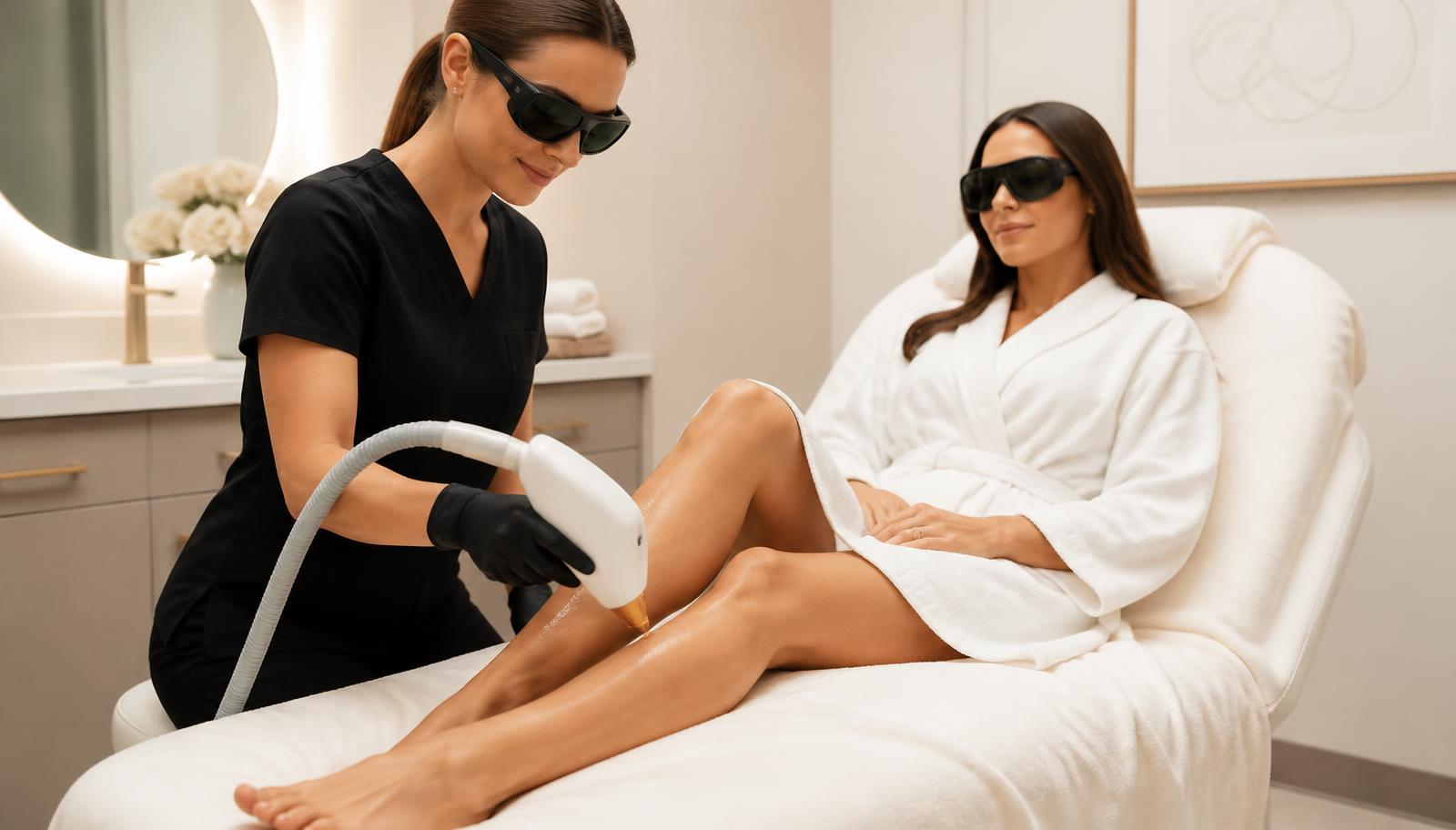
- Skin Preparation: The targeted area is thoroughly cleansed to remove surface makeup, oils, and sunscreens. Protective eye shields are placed over your eyes to safeguard them from the bright flashes of light. A cool, conductive gel is then applied to the treatment area to allow the device handpiece to glide smoothly while cooling the skin.
- The Treatment Process: Your provider glides the handpiece over the skin, delivering precise pulses of light. With each flash, clients typically feel a brief, mild sensation often described as a warm snap—similar to a tiny rubber band snapping against the skin. Depending on the size of the area being addressed, a session usually lasts between 20 and 45 minutes.
- Post-Treatment Appearance: Immediately following the procedure, the skin may look slightly flushed or pink, comparable to a mild sunburn. A mild sensation of warmth is normal and typically subsides within a few hours. Your provider will apply a soothing moisturizer and a broad-spectrum physical sunscreen before you leave.
- Recovery and Aftercare: There is minimal downtime associated with an IPL photofacial, allowing clients commuting from Downtown Miami, South Beach, or Broward County to easily return to their daily routines. Over the next 3 to 7 days, targeted pigmented spots will darken and darken before naturally sloughing away. It is essential to avoid scrubbing or picking at the skin and to apply broad-spectrum sunscreen consistently.
Questions to Ask Your Licensed Aesthetic Provider
Selecting a qualified and experienced provider is essential for achieving safe, optimal results with any light-based treatment. During your consultation, consider asking these foundational questions:
What experience and credentials do you have with light-based therapies? Ensure your provider is a licensed healthcare or aesthetic professional with specialized training in IPL technology and skin spectrum assessment.
How do you adjust IPL settings for my specific skin type? A qualified provider customizes light wavelengths, energy fluence, and pulse timing based on your individual Fitzpatrick skin type and degree of sun damage.
How many IPL sessions will I likely need to reach my goals? While subtle clarity improvements are often visible after a single session, a series of 3 to 5 treatments spaced several weeks apart is commonly recommended for comprehensive clearance of sun damage.
---
Sun-damaged skin does not have to be a permanent feature of living in South Florida. If you are interested in restoring skin clarity and addressing visible photoaging, we invite you to learn more about our approach to tailored aesthetic care.
Contact No Filter Medical Spa in Brickell, Miami today to schedule a consultation with our licensed team and discover a personalized skin care strategy designed for your lifestyle.
Disclaimer: Aesthetic treatment results vary from person to person based on individual skin type, degree of sun damage, lifestyle factors, and medical history. The information provided in this article is for educational purposes only and should not be construed as medical advice. Always consult with a qualified, licensed aesthetic provider prior to starting any new aesthetic treatment.
This article is for general education only. It is not medical advice, results vary from person to person, and you should consult a licensed provider before starting any treatment.
Book a Consultation