laser
Laser Hair Removal: How Many Sessions Do You Need?
No Filter Medical Spa · September 19, 2026
Living in Miami, smooth, low-maintenance skin isn't just a luxury—it is practically a lifestyle requirement. Between weekend trips to Key Biscayne, afternoons along the Brickell waterfront, and year-round warm weather, daily shaving and frequent waxing can quickly feel like a never-ending chore. It comes as no surprise that laser hair removal remains one of the most requested treatments at No Filter Medical Spa.
Yet, one of the first questions almost every client asks during a consultation is straightforward: when considering laser hair removal, how many sessions will it actually take to see lasting results?
The answer is rooted in biological science rather than a one-size-fits-all formula. To help you plan your journey to effortless skin, let us break down how laser hair removal works, why multiple appointments are essential, and what you can expect along the way.
What Laser Hair Removal Actually Is
In plain language, laser hair removal is an aesthetic procedure that uses concentrated beams of light energy to selectively reduce unwanted body and facial hair. Unlike superficial hair removal methods like shaving or depilatory creams—which simply cut or dissolve hair at the skin's surface—laser treatments target the root of the issue beneath the surface.
During a session, a specialized handpiece emits light pulses absorbed by pigment (melanin) inside the hair follicle. This light converts to thermal energy (heat), gently damaging the follicle structure responsible for producing hair. Over time, treated follicles lose their ability to grow thick, dense hair, leading to significant, long-term reduction.
It is helpful to view laser hair removal not as a single event, but as a progressive journey. Rather than instantly erasing every follicle in one afternoon, each session systematically reduces hair density, softens hair texture, and slows regrowth until the area becomes smooth and manageable.
How the Treatment Works (and Why Sessions Matter)
To understand why a single appointment is never enough, we have to look at how human hair naturally grows. Hair growth is not continuous; every follicle on your body cycles through three distinct phases:
- Anagen (The Growth Phase): This is the active stage where the hair bulb is attached to the blood supply and rich in pigment. Laser energy is only effective on hair follicles during this specific active growth phase.
- Catagen (The Transition Phase): The follicle begins to shrink and detach from its blood supply, preparing to rest.
- Telogen (The Resting Phase): The old hair falls out or rests in place while the follicle remains dormant before restarting the growth cycle.
At any given moment, only about 15% to 20% of the hair in a given area is in the active Anagen phase. Because laser light only impacts hair actively connected to the follicle base, a single session can only target that active percentage. The remaining hair follicles—currently in resting or transition phases—will not be permanently affected until they enter their next Anagen cycle.
So, for laser hair removal, how many sessions are typically required?
For most individuals, a standard initial treatment plan ranges between 6 to 8 sessions, spaced strategically several weeks apart. However, the exact timeline varies based on several key variables:
- Treatment Area: Sessions are spaced 4 to 6 weeks apart to align with natural growth cycles.
- Hair Density & Texture: Coarser hair absorbs laser energy very efficiently, often showing noticeable changes early on, whereas finer hair may require additional sessions to achieve optimal reduction.
- Hormonal Influences: Areas influenced heavily by hormones (such as the chin, jawline, or upper lip) may require ongoing touch-up sessions over time to maintain smooth results.
Who It Is Typically Considered For
Modern laser technology has evolved significantly. Years ago, laser hair removal was primarily limited to individuals with very light skin and dark hair. Today, advanced modalities allow us to safely and effectively treat a wide variety of skin tones across the Fitzpatrick scale.
Laser hair removal is generally considered for anyone looking to: Eliminate the continuous cycle of shaving, waxing, or plucking. Reduce painful ingrown hairs and razor bumps (pseudofolliculitis barbae). * Achieve smoother texture on areas such as the legs, underarms, bikini line, back, chest, or face.
During your initial consultation, a qualified practitioner will evaluate your skin tone, hair color, and medical history. Because lasers rely on pigment absorption, extremely light hair—such as white, gray, blonde, or red—contains less melanin and may respond differently. A personal assessment ensures that your expectations align with what light-based treatments can realistically deliver.
What a Session Generally Looks Like
If you are new to the experience, knowing what to expect can help you feel completely comfortable before walking into the suite.
Preparing for Your Appointment Preparation begins at home. We ask clients to shave the target area approximately 24 hours before their session. Shaving leaves the hair root intact within the follicle while preventing surface hair from singeing on top of the skin. You should avoid sun exposure, tanning beds, and sunless tanning creams for several weeks prior, as excess pigment in the skin can interfere with laser absorption.
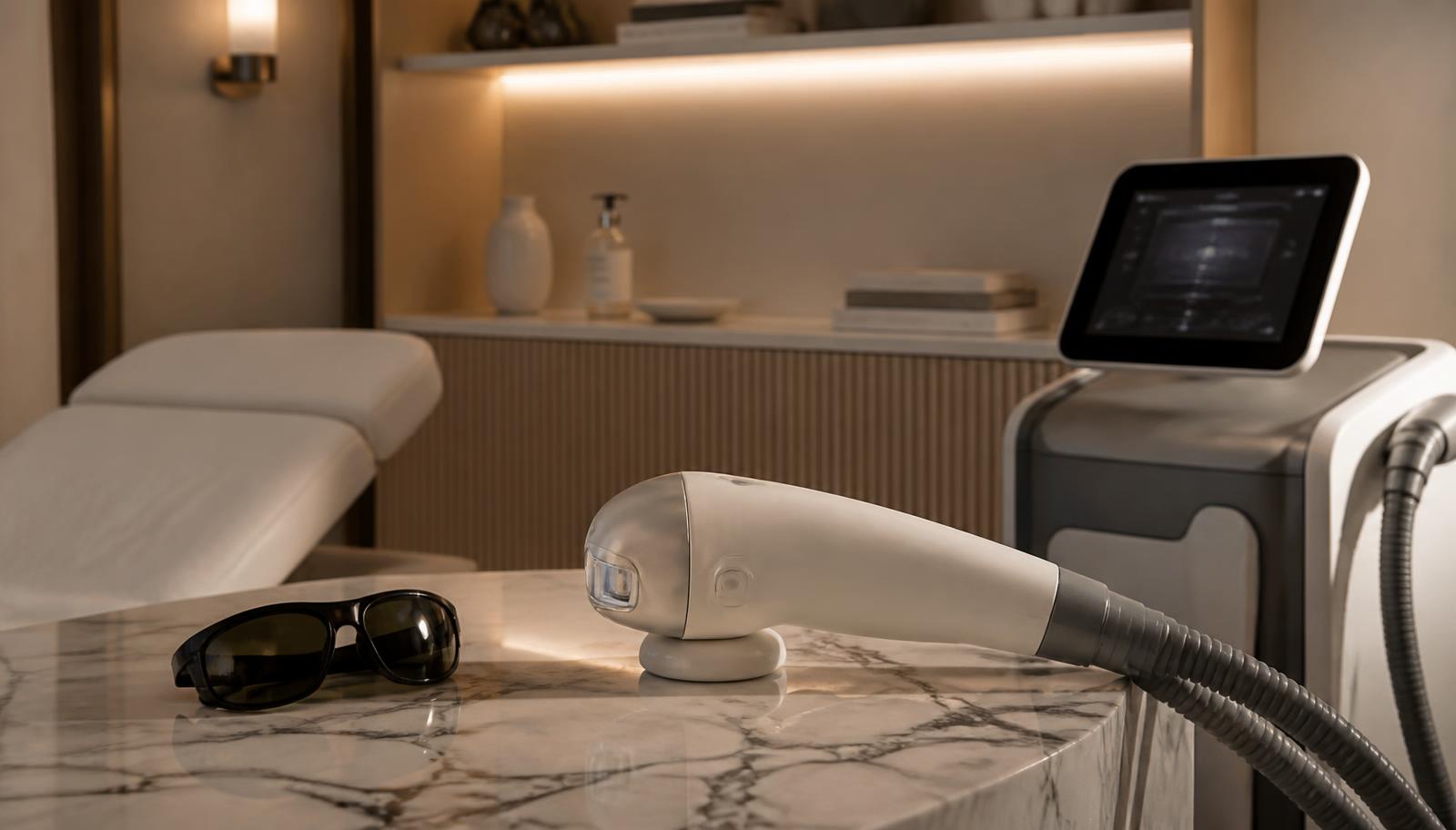
During the Session Once settled comfortably, both you and your provider will wear protective eyewear. Your specialist will glide the laser handpiece across the designated area. Many modern devices feature integrated cooling tips or ambient air cooling to keep the skin comfortable throughout the process. Most clients describe the sensation as a quick snap, similar to a warm rubber band against the skin, followed by a cooling sensation.
Depending on the size of the area—from a small upper lip to full legs—a session can take anywhere from 10 minutes to under an hour.
Post-Treatment Care After treatment, the skin may show mild redness or slight swelling around the hair follicles, similar to a minor sunburn. This usually resolves within a few hours. You will be advised to keep the area clean, avoid hot showers, saunas, and strenuous exercise for 24 to 48 hours, and apply broad-spectrum sunscreen diligently—especially important when navigating the sunny streets of Brickell.
Questions to Ask a Licensed Provider
Choosing the right medical spa and provider is the most critical step in ensuring a safe, effective outcome. When booking a consultation, consider asking the following questions:
- Which laser technology do you use, and is it suitable for my specific skin tone?
- What treatment interval do you recommend for the specific area I want to target?
- How should I adjust my skincare routine (e.g., active ingredients, sun exposure) before and after my sessions?
- What is your protocol for maintenance or touch-up sessions in the future?
Taking time to discuss these points ensures your treatment plan is tailored precisely to your skin profile and lifestyle.
Your Path to Smooth Skin in Brickell
Achieving long-lasting reduction in unwanted hair is a process that rewards patience and consistency. By following a tailored schedule built around your natural growth cycles, you can enjoy skin that feels sleek, smooth, and effortless every day of the year.
At No Filter Medical Spa, our expert clinical team takes an editorial, personalized approach to aesthetic care. Explore our complete line of laser and skin therapies on our services menu, or learn more about our philosophy on our about page.
Ready to get started? We invite you to book a private consultation at our luxury space in Brickell, Miami, where we will design a personalized laser hair removal plan crafted specifically for you.
Disclaimer: Individual results vary based on hair color, skin type, hormonal factors, and adherence to treatment schedules. Always consult with a licensed aesthetic provider or medical professional to determine if laser hair removal is right for your unique skin and health profile.
This article is for general education only. It is not medical advice, results vary from person to person, and you should consult a licensed provider before starting any treatment.
Book a Consultation