skin
The Best Treatments for Acne Scars: A Skincare Guide
No Filter Medical Spa · September 17, 2026
Acne breakouts can leave behind lasting reminders on the skin long after the active inflammation has cleared. Whether you are dealing with shallow textural unevenness, deeper depressions, or lingering discoloration, understanding the best treatments for acne scars begins with recognizing that no two skin journeys are identical. Modern aesthetic medicine offers a sophisticated array of modalities designed to encourage the skin’s natural healing response and rebuild smooth, balanced tissue.
At No Filter Medical Spa, we believe in an educational, tailored approach to skin health. By demystifying how professional modalities work beneath the surface, you can make informed, confident choices alongside a qualified provider.
Understanding Acne Scars: Types and Texture
To choose the appropriate corrective approach, it is helpful to understand what an acne scar actually is. When a deep acne lesion becomes inflamed, the follicle wall breaks down. The body naturally attempts to repair this tissue by producing new collagen fibers. However, if the body produces too little or too much collagen during the healing phase, a visible scar remains.
Scarring typically falls into two main categories:
- Atrophic Scars (Depressed): These occur when there is a loss of tissue. They are the most common type of acne scar on the face and are further categorized into:
- Ice Pick Scars: Small, narrow, deep indentations that resemble tiny punctures.
- Boxcar Scars: Broader, sharply defined depressions with steep vertical edges.
- Rolling Scars: Wide depressions with sloping edges that create a subtle wave-like texture across the skin.
- Hypertrophic or Keloidal Scars (Raised): These occur when the body produces an excess of collagen during healing, creating raised, thickened tissue. They are more frequently seen on the chest, back, or jawline.
It is also common to mistake post-inflammatory hyperpigmentation (PIH) or erythema (redness) for structural scarring. While dark marks and redness represent temporary pigment changes, true scars involve structural alterations in the dermal matrix.
Modern Clinical Modalities: How They Work
When exploring the best treatments for acne scars, aesthetic providers select technologies based on scar depth, skin tone, and overall tissue integrity. Rather than relying on a single magic solution, effective scar revision often relies on collagen induction and controlled cellular turnover.
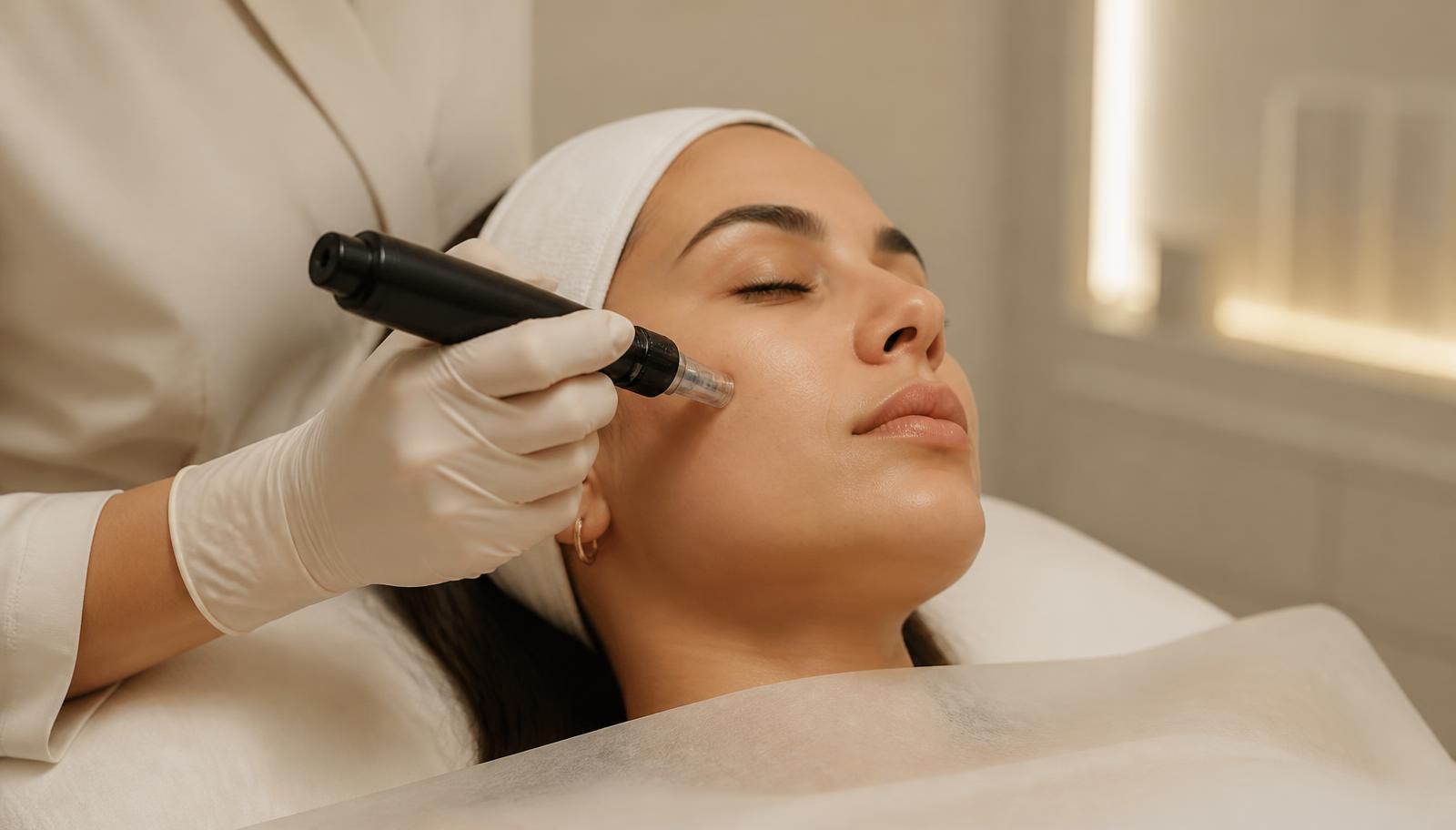
Microneedling and RF Microneedling Traditional microneedling uses ultra-fine, sterile needles to create micro-channels in the upper layers of the skin. This controlled micro-injury triggers the body’s natural wound-healing process, stimulating fibroblasts to produce fresh collagen and elastin over time.
Radiofrequency (RF) Microneedling elevates this process by emitting thermal energy into the deeper dermal layers through the needles. The combination of mechanical micro-injuries and heat causes gentle coagulation in the deeper tissue, promoting tighter skin structure and enhanced remodeling of rolling or boxcar scars.
Chemical Peels Medical-grade chemical peels utilize controlled concentrations of exfoliating acids (such as glycolic, salicylic, or trichloroacetic acid) to remove dull, outer layers of damaged skin. For superficial scarring and persistent post-acne pigmentation, targeted peels promote rapid cellular turnover, smoothing surface texture and brightening uneven tone.
Fractional Laser Resurfacing Fractional lasers deliver targeted columns of light energy into the skin, leaving surrounding tissue intact to speed up recovery. The heat stimulates rapid tissue regeneration and collagen synthesis. Non-ablative lasers warm the underlying tissue without disrupting the surface, making them a popular choice for mild texture issues with minimal downtime. Ablative lasers, on the other hand, remove thin outer layers of skin for more dramatic structural revision.
Who Are These Treatments Designed For?
Professional scar revision treatments are typically considered for individuals who have successfully managed active acne and are now looking to address lingering textural changes or discoloration.
Ideal candidates generally: - Have active breakouts well under control (treating active acne first prevents new scarring from forming). - Possess realistic expectations regarding gradual skin improvement. - Are committed to strict sun protection and diligent post-treatment care. - Have discussed their medical history, including any tendency toward keloid formation or recent use of oral acne medications, with a licensed practitioner.
Different skin types and tones require specific treatment settings and modalities. For example, deeper skin tones often benefit from RF microneedling or specific superficial peels that minimize the risk of post-treatment hyperpigmentation.
What a Typical Treatment Journey Looks Like
Achieving smoother skin texture is a continuous process rather than a one-time event. Rebuilding collagen takes time, and most scar revision plans involve a series of structured sessions.
- Comprehensive Consultation: Your provider begins by assessing your skin type, examining scar depth, reviewing medical history, and listening to your personal aesthetic goals. You can learn more about our approach on our about page.
- Preparation: Depending on the treatment selected, your provider may recommend specific topical skin preparation for a few weeks prior to optimize skin health and lower the risk of side effects.
- The Session: On the day of your appointment, the skin is thoroughly cleansed. Topically applied numbing cream is often used for modalities like RF microneedling or laser resurfacing to ensure your comfort. The treatment itself typically takes between 30 to 60 minutes.
- Recovery & Aftercare: Following a session, mild redness, warmth, or subtle swelling similar to a mild sunburn is common. Your provider will provide detailed aftercare instructions, emphasizing gentle hydration, avoidance of active skincare acids, and rigorous sun protection.
Over the following weeks and months, as fresh collagen accumulates in the dermis, the skin's surface gradually appears smoother and more refined.
Essential Questions to Ask Your Licensed Provider
Before initiating any clinical scar treatment, having an open, thorough conversation with your aesthetic team is essential. Consider asking the following questions during your initial evaluation:
- Which specific types of acne scars do I have, and which modalities are most suitable for them?
- How many sessions do you anticipate I will need to see meaningful improvement?
- What is the expected downtime and recovery care for the recommended treatment?
- What measures do you take to safeguard my specific skin tone during energy-based treatments?
- How should I adjust my current home skincare routine before and after my appointments?
Choosing an experienced practitioner ensures that your treatment plan is customized safely to your skin’s unique architecture.
Disclaimer: Individual results vary depending on skin condition, scar depth, age, and adherence to aftercare guidelines. Aesthetic treatments do not guarantee complete scar removal. Always consult with a qualified, licensed aesthetic provider to determine the safest and most effective plan for your skin.
Ready to explore personalized options for skin restoration? Explore our full menu of advanced facial treatments on our services page, or visit us at No Filter Medical Spa in Brickell, Miami, to book your personal skin consultation today.
This article is for general education only. It is not medical advice, results vary from person to person, and you should consult a licensed provider before starting any treatment.
Book a Consultation